How Much Does a One-Week Trip to Japan Cost Complete Budget Breakdown
Travel
|
May 9, 2026
A one-week trip to Japan typically costs around 100,000–¥300,000 ($700–$2,000) per person, excluding or including flights depending on your travel style and departure location. The total cost depends on factors such as accommodation, food choices, transportation, activities, and the season you visit. Budget travelers can explore Japan with affordable hotels, convenience-store meals, and regional transportation, while mid-range and luxury travelers may spend more on hotels, dining, and experiences. This guide breaks down the main expenses to help you create a realistic budget for a 7-day Japan trip.
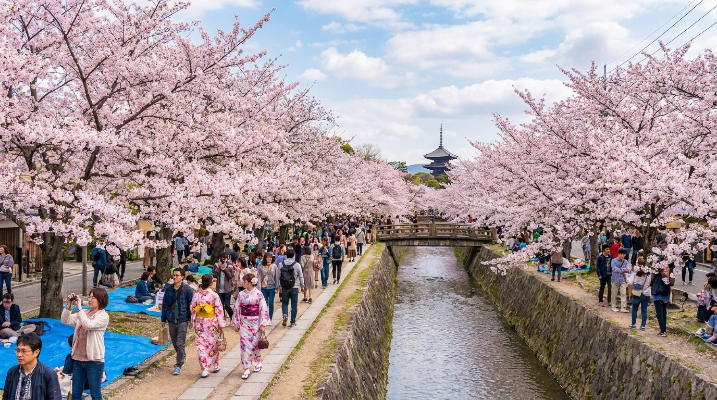
1. How Much Does a One-Week Trip to Japan Cost?
The overall cost of a one-week trip to Japan can vary greatly depending on the traveler's style. For budget-conscious adventurers, the estimated total cost ranges from $700 to $1,000. This category generally includes hostel accommodations, cost-effective meals, and public transportation. On the other hand, mid-range travelers can anticipate spending approximately $1,500 to $2,500, facilitating stays at comfortable hotels, enjoying meals at reasonable dining establishments, and participating in various attractions. Those seeking a luxury experience should prepare for expenses starting at around $3,000, covering upscale hotels, fine dining, and personalized tours. These estimates are based on assumptions that the traveler departs from major cities like Los Angeles or New York during flights characterized by moderate rates and optimal weather for travel. Furthermore, these figures reflect a balanced travel style, allowing for strategic savings on lodging while indulging in unique experiences.
2. What’s Included in a One-Week Japan Trip Budget?
In devising a budget for your trip to Japan, it is essential to clarify what is covered in your estimated costs. The budget typically encompasses international airfare, accommodation (which can include a mix of hotels and hostels), public transportation (like trains and buses), and meals (varied mid-range dining options). These inclusions provide several critical components for your comprehensive travel budget.
Conversely, certain items are excluded from this cost estimation. Personal expenditures, such as souvenirs, snacks, or any spontaneous purchases, are not taken into account. Moreover, unique experiences like themed cafés, guided tours, or entrance fees for certain attractions may necessitate additional budgeting. Being aware of these inclusions and exclusions will facilitate a more precise understanding of the total cost involved in your week-long adventure in Japan, ensuring a trip enjoyed free from unexpected financial burdens.
3. Japan Trip Costs by Travel Style: Budget, Mid-Range, and Luxury
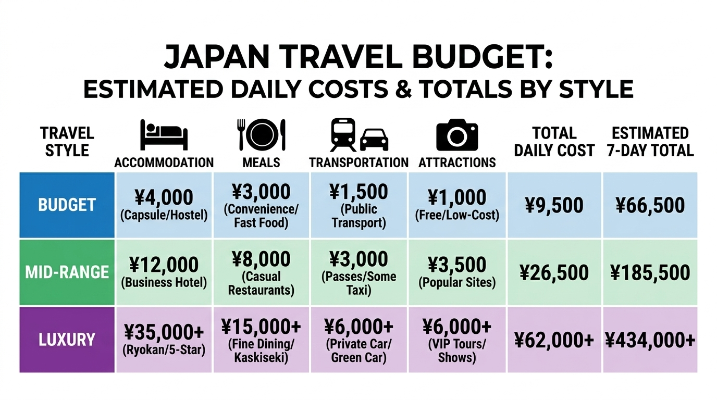
To facilitate effective budgeting, the following table outlines a comparative summary of estimated costs per day under various travel styles, from budget to luxury, including the projected weekly total:
This table provides a clear visualization of the anticipated expenses and can streamline the budgeting process, ensuring both economical and enjoyable discovery of Japan's offerings. Whether opting for backpacker-friendly options or lavish accommodations, these comparisons guide you toward making well-informed choices for your travel budget.
4. Japan Trip Cost Breakdown: Where Your Money Goes
Understanding the financial facets of a one-week trip to Japan is pivotal for travelers looking to strategically allocate their funds. Below is a detailed breakdown across essential expense categories:
Accommodation: Budget for around $600 for six nights at mid-range hotels, averaging $100 per night; budget accommodations can decrease this cost to approximately $300.
Meals: Anticipate daily food costs averaging $30, culminating in around $210 for the week. This amount reflects affordable meal options, such as ramen at approximately $10, alongside occasional izakaya dinners, costing around $20.
Local Transit: Consider setting aside $50 for local transportation, encompassing metro and bus fares. A prepaid Suica or Pasmo card offers great convenience for navigating Tokyo's extensive transport system.
Intercity Transport: A Japan Rail Pass, priced around $280 for the week, facilitates convenient travel between Japan's key cities.
Attractions and Activities: Prepare to allocate around $100 for entry fees into significant attractions, including temples and museums. Visiting an amusement park, like Universal Studios, may incur about $80.
Connectivity (SIM/Data Plans): Expect to invest about $50 for a SIM card or portable Wi-Fi device—ideal for easy navigation and staying connected.
Insurance: Plan for approximately $30 for travel insurance, which adds peace of mind against potential unforeseen events.
Shopping and Souvenirs: Set aside at least $100 for souvenirs, local crafts, or specialty items, allowing you to bring home memories of your time in Japan.
Contingency: It's sensibly prudent to reserve an additional 10% of your total estimated expenses, contributing around $100 for unanticipated costs.
In total, the advised budget for a week in Japan is around $1,620, striking a balance between comfort and immersion in local culture. This financial blueprint serves as a sturdy foundation while allowing flexibility to personalize your adventure according to individual preferences or spontaneous explorations.
5. International Flight Costs to Japan: What to Expect
When charting a trip to Japan, airfare prices can fluctuate remarkably based on departure city, seasonal factors, and timing of bookings. For travelers leaving from Los Angeles, round-trip expenses can range from $600 to $1,200. Meanwhile, those setting out from New York may confront prices between $700 and $1,400. The cherry blossom season (late March to early April) and summer months (June to August) typically mark peak travel times, leading to increased fares. Conversely, flights during shoulder seasons—fall (September to November) or winter, excluding holiday periods—often yield more budget-friendly options.
To optimize your chances of securing favorable tickets, consider booking flights two to three months ahead of your intended departure. Utilized platforms such as Skyscanner and Google Flights can be immensely helpful for tracking flight prices, enabling you to set alerts for price drops. Effective use of these resources can lead to significant savings, enhancing the financial feasibility of your trip to Japan.
6. One-City vs. Multi-City Japan Trip Costs
When constructing a week-long itinerary in Japan, determining whether to maintain a single-base stay in Tokyo versus exploring multiple destinations can significantly influence costs.
Choosing a single-base approach offers the convenience of settled accommodation, often resulting in reduced lodging expenses, as packing and relocating frequently can add unnecessary costs. For example, a week's stay in a Tokyo hotel averages around ¥10,000 per night, totaling approximately ¥70,000. However, opting for a multi-city journey can lead to increased transportation and accommodation costs in cities like Kyoto and Osaka, where average hotel prices hover around ¥8,000 nightly.
The Japan Rail Pass supplies substantial savings for those embracing a multi-city itinerary. For instance, round-trips from Tokyo to Kyoto and Osaka can ostensibly cost around ¥28,000 for individual tickets, whereas a national pass, enabling unlimited travel in a week, is offered at roughly ¥29,000. If your itinerary features multiple train trips—an undeniable advantage of Japan's extensive rail network—the nationwide pass commonly emerges as the best choice for cost-effectiveness, allowing for an enriching exploration of Japan's diverse landscapes and cultures.
7. How to Save Money on a Japan Trip Without Sacrificing Experience
Traveling in Japan offers abundant opportunities for enriching experiences, all while adhering to a budget. Capitalize on public transport, notably Japan's efficient train and bus systems, to eliminate hefty taxi fares. When dining, explore local restaurants or convenience store meals characterized by authentic flavors at more conscientious prices—ensuring you relish quality cuisine without the hefty price tag. Also, make an effort to indulge in the many free attractions spanning parks, shrines, and museums that occasionally waive entry fees. However, maintain a critical eye on seemingly inexpensive options that could compromise your experience. True savings seamlessly intersect with quality choices; be intentional and clear in your selections as you navigate your adventure. Remember, wise choices pave the way for memorable journeys!
Planning Your Japan Trip Budget
A one-week trip to Japan can fit different budgets depending on your travel style, accommodation choices, dining preferences, and planned activities. While some travelers may enjoy Japan with a smaller budget, others may spend more on premium hotels, dining experiences, and longer-distance transportation.
Use the estimated costs in this guide as a planning reference rather than a fixed price. Before booking, check current flight prices, accommodation rates, and seasonal changes that may affect your total expenses. With a clear budget and realistic expectations, you can enjoy Japan’s culture, food, and attractions while keeping your spending under control.
Just For You

Discover Unforgettable Europe Unique Travel Destinations Await
April 22, 2026

Stress-Free Mother’s Day Ideas For Moms Who Need To Unwind
March 25, 2026

Best Bio-Based Biodegradable Baby Wipes for Sensitive Skin Kids
March 20, 2026

Iron Deficiency in Infants: Why This Hidden Risk Matters More Now
March 18, 2026

How to Plan a Family Vacation on a Tight Budget without the Stress
March 17, 2026

Modular Baby Strollers: Why Flexible Designs Are Gaining Popularity
March 16, 2026
Recommended For You
Smart Ways To Save Money While Traveling The World

Best Honeymoon Destinations for 2026 Romantic Getaways for Every Couple
Traveling Alone These Are the Best Places to Travel Solo in 2026

How to Build a Skincare Routine from Scratch: A Beginner's Guide

12 Best Places To Visit In Europe For Unforgettable Adventures